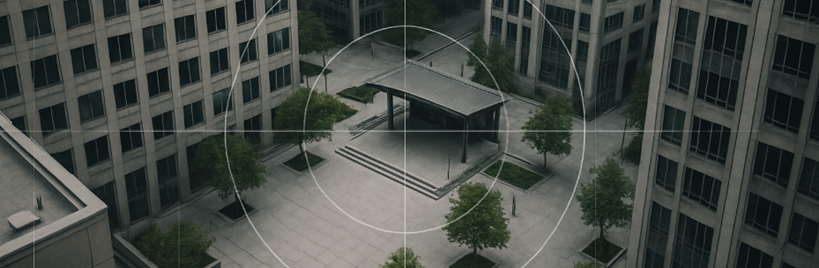
The real lessons from the Charlie Kirk attack.
A protective intelligence breakdown of the security gaps that shaped the outcome, and the documented threat and vulnerability assessment process built to catch them.
This Charlie Kirk security assessment looks at the event from a different angle than most of the coverage that followed it. Rather than examining the shooter, the politics, or the aftermath, it examines the security structure around the event itself: what was assessed, what was assumed, and what a documented, disciplined process would have looked like instead. That distinction matters, because the failures that shaped this outcome were not exotic or unforeseeable. They were the kind of gaps a structured threat and vulnerability assessment is specifically built to catch before an event happens, not after.
- No documented assessment
- No ownership of risk
- Unverified assumptions about rooftop control
- No intelligence workflow
- No coordination with key partners
- Everyone assumed someone else was handling it
These failures were predictable, and preventable.
What this white paper actually examines
Our new Alpha Recon white paper breaks down the systemic gaps that shaped the event and shows how a disciplined, risk-intelligent security program:
- Identifies vulnerabilities earlier
- Validates assumptions instead of operating on them
- Uses structured threat and vulnerability assessments (TVAs) to guide decisions
- Aligns people, process, and technology before an event begins
- Reduces the likelihood of poor outcomes
This is not a paper about technology, social media chatter, or EP modernization. It is about fundamentals: disciplined assessment, structured workflows, and risk ownership.
Why security leaders should read this Charlie Kirk security analysis
If your team wants to understand what was missed and why, this analysis is a good place to start.
The paper provides a clear, methodical look at:
- How the environment was already signaling risk
- How assumptions replaced verified information
- How fragmented responsibilities amplified exposure
- How a proper TVA could have reshaped the operational plan
This is a practical, evidence-based breakdown for corporate security leaders, EP managers, and anyone responsible for operational risk.
Why this analysis matters
The Charlie Kirk incident highlights a deeper industry problem: when assumptions replace validated assessments, preventable risks escalate into operational failures.
This paper emphasizes the need for disciplined threat and vulnerability assessments, clear ownership of risk, and structured, verifiable workflows that eliminate ambiguity long before an event begins.
The consequences of neglecting these fundamentals are misalignment, missed signals, and predictable failures, not slower response times.
Who this Charlie Kirk security assessment is for
This white paper is written for people who own security decisions, not people who study them from the outside. That includes corporate security directors weighing coverage for public-facing executives, executive protection managers planning open-air or high-visibility events, and risk leaders who need to explain, after the fact, why a given security posture was chosen. The goal isn’t to assign blame in hindsight. It’s to give teams a structured way to catch the same category of gap before their own event, not after.
A documented threat and vulnerability assessment does not eliminate risk. It replaces assumption with a verified, defensible basis for the decisions a security team actually makes, staffing levels, perimeter design, overwatch coverage, and escalation authority. That documentation is what turns a security plan into something that can be reviewed, explained, and improved, rather than a set of unwritten assumptions that only surface after something goes wrong.
Download the full white paper
“How a Proper Threat & Vulnerability Assessment (TVA) Could, and Would, Have Reduced the Probability of a Successful Fatal Shooting at the Turning Point USA / Charlie Kirk Event” offers a detailed look at the data patterns, risk evolution, and decision points that shaped this case.